
Core Practical Skills for Wholesale Wall Bookcases in Libraries
When you set out to furnish a library, picking the right book storage is a big and important choice. A library is not just a room for books. It is a place where people come to read quietly, to study, to meet, and to find knowledge. So, when you buy wholesale wall bookcases, they must fit the space, the budget, and the daily work of the library. This is very important. If you are building a new public library or fixing up an old university one, you need to know the main points for choosing and installing bookshelves. Doing this right can save you thousands of dollars and help you avoid many problems later. This guide shows you how to buy, install, and take care of wholesale wall bookcases, so you can build a bookshelf system that really works for the people who use it and the people who run it.
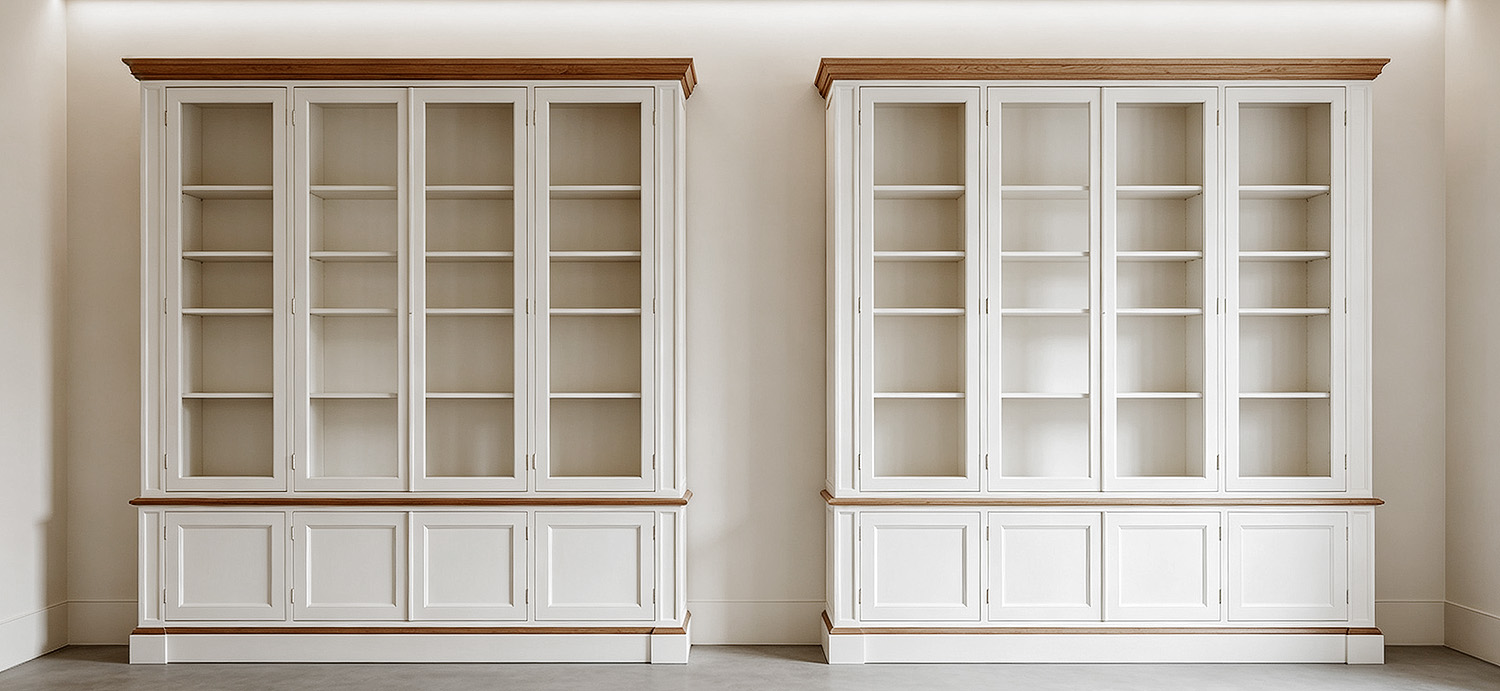
Basic Characteristics of Library Wall Bookcases
Before you buy anything, you must know how a library wall bookcase is different from one you would use at home. Library shelves carry a much heavier load. They must handle books of all sizes, from thin small books to big heavy reference books, and they must do this every day for many years. Good wholesale wall bookcases for libraries have shelves you can move up and down, and they have strong back panels. The surface of the bookcase must not scratch easily or fade in the light. When you buy wholesale, you get a lower price for each unit. But that is not all. You also get the same look and the same quality for all the bookcases in the whole library. If you know these basic points, you can talk to the suppliers clearly and avoid costly mistakes later when the work is almost done.
1. Priority on load-bearing performance: Books are very heavy. You must always check how much weight each shelf is rated to hold.
2. Adjustable shelves: You can change the shelf height to fit different book sizes, which gives you great storage flexibility.
3. Wall-mounted stability: These bookcases are fixed to the wall for safety. This stops them from tipping over, which is very important in busy areas.
4. Material durability: Steel frames and fire-resistant laminate are much better than particle board and will last much longer.
5. Advantages of wholesale standardization: All units have the same size. This makes them easier to install and leaves room for future expansion.
Understanding these simple but key points is the starting point for every decision you will make about the library's bookshelves.
Material Selection Methods for Bookcases
The material you choose will decide how long the wholesale wall bookcases last, how they look, and how hard they are to keep clean. For a commercial library, the shelves are usually made from solid wood, metal, or engineered wood boards. Solid wood has a classic look and lasts a very long time, but it costs more. Steel shelving can hold the most weight, so it is perfect for large collections and many heavy reference books. Melamine-faced MDF gives you a good balance between cost and performance, which is why it is a popular choice for wholesale orders. When you decide, you need to think about the library's humidity, how many people visit, and your budget. Picking the right material from the start lets the furniture work well for many years.
1. Solid wood materials: These look great and are very high quality. They are also very strong and last a long time, but the purchase cost is high.
2. Steel/metal materials: These can carry the heaviest loads and are best for storing a lot of heavy reference books.
3. Melamine-faced MDF: This is cost-effective, comes in many styles, and is simple to clean and keep up.
4. Steel-wood hybrid models: These use a metal frame with wood-grain laminate shelves. They look good and are very strong.
5. Eco-friendly sustainable options: You can also choose FSC-certified wood panels and recycled metal materials if you want to be more environmentally friendly.
Spending money on good, durable materials early on prevents the shelves from bending or sagging later. This saves you from the extra cost of having to replace them often.
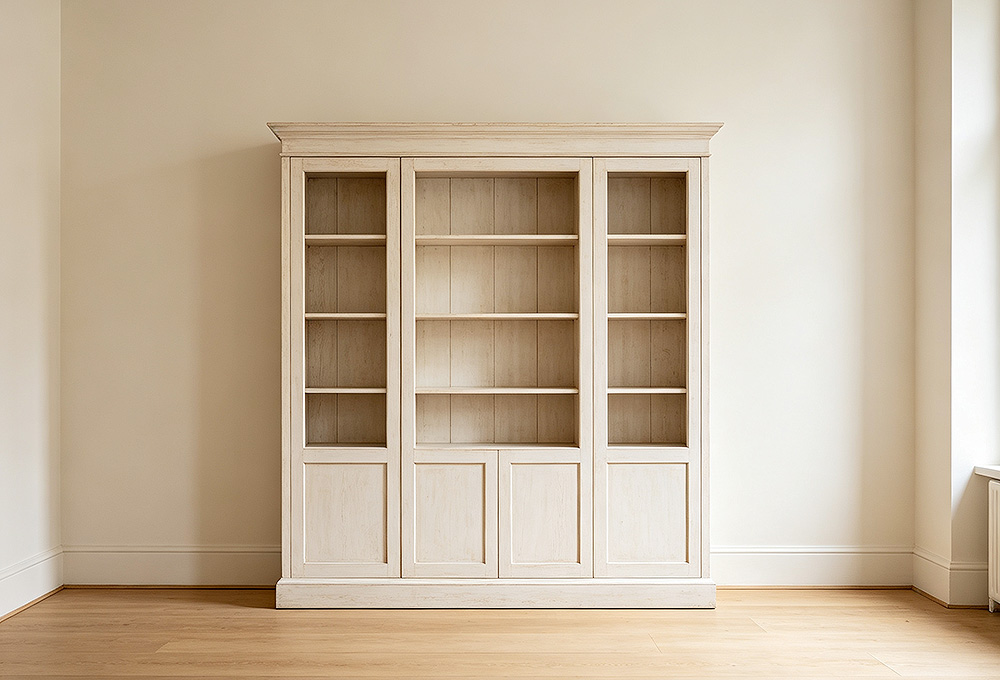
Accurate Site Dimension Survey
Taking precise measurements is the base for a smooth installation of your wholesale wall bookcases. Libraries often have special building features like support columns, windows, radiators, and power outlets. Normal-sized cabinets will not fit around these things. You will need to make special adjustments for them. Before you place a wholesale order, you must do a full survey of the space. Measure the total length of each wall and the height from floor to ceiling. Mark down where every obstacle is. You also need to leave enough space for people to walk between the shelves. Accessibility rules say the aisles must be at least 91 centimeters wide so that a wheelchair can pass through. If you do not plan well at the start, you will have a big problem when the cabinets are delivered and they do not fit. It is a good idea to draw a simple floor plan by hand or use design software to plan the layout before you order.
1. Measure twice before ordering: Always double-check the dimensions of every wall to avoid making a mistake.
2. Mark all obstacles: Write down where all the windows, power outlets, and heating and cooling equipment are.
3. Plan aisle width: Make sure the space between shelves meets accessibility standards.
4. Consider ceiling height limits: Tall cabinets give you more storage, but you need to be able to reach the top books safely.
5. Map visitor circulation: Put the popular book collections near the entrance so people can find them easily.
Doing a careful survey makes installation much easier and helps you use all the library's storage space as best as possible.
Balancing Aesthetic Appeal and Practical Functionality
A good library needs the right wholesale wall bookcases to feel comfortable and welcoming. But the way it looks cannot be more important than how well it works. Open-back shelving looks light and modern, but it does not protect the books from dust. Closed-back units have a more traditional style and do a better job of keeping dust out. The color you choose is also key. Wood tones make the reading area feel warm, while white and light gray look clean and fit well in modern spaces. Some wholesale cabinets let you add built-in LED light strips to light up dark corners. The design of the bookshelves must match the library's overall style, but its main job is to help readers find and take out books quickly and easily.
1. Open back vs. closed back: You should pick the style based on how much dust there is and the look of the space.
2. Unified color matching: The color of the cabinets should go with the rest of the room's decoration.
3. Decorative end panels: These can make the whole set of bookshelves look better and more finished.
4. Optional integrated lighting: LED light strips make display areas brighter and improve the atmosphere.
5. Label slot compatibility: The shelves need to work with the library's system for labeling and classifying books.
When you find a good balance between appearance and usefulness, you create a reading space that is both attractive and works very well for its purpose.
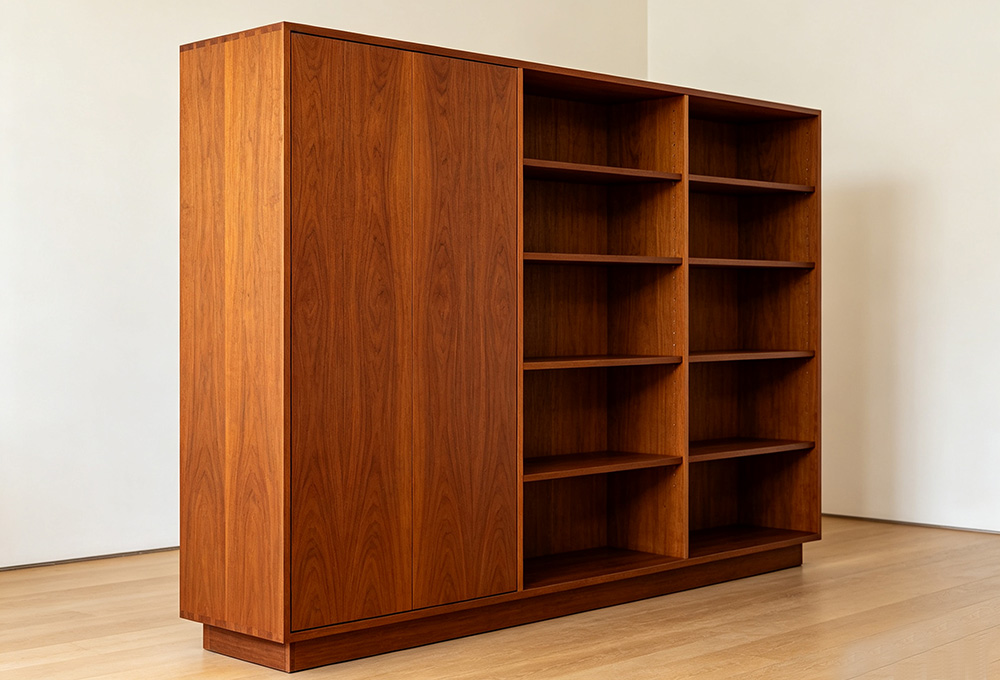
Scientific Budget Planning for Wholesale Procurement
Buying a full set of wholesale wall bookcases is a large investment in a fixed asset. Good budget planning helps you use your money in the smartest way. First, you should separate the areas that need new shelves right away from the areas that can wait. Most suppliers use a tiered pricing system. This means the price for each unit goes down when you order more. Your budget must include the cost of shipping, the installation fees, and all the small hardware parts. You can ask the manufacturers about special discounts for schools and other educational institutions. It is also wise to set aside 10% to 15% of your total budget as a reserve for unexpected costs. You must remember that the cheapest price is not always the best value. You should look at the total cost of the cabinets over their entire life.
1. Zone priority classification: Focus your budget on fixing up the busiest areas of the library first.
2. Leverage tiered wholesale pricing: Ordering more units at once lowers the cost of each one.
3. Include hidden costs: The price of shipping and paying workers to install the shelves is very important and must be in the budget.
4. Inquire about institutional exclusive discounts: Many manufacturers give special lower prices to libraries and schools.
5. Reserve contingency funds: Keep some money aside for unexpected things like changes needed on site or extra parts.
When you plan your budget well, you get the most value for your money without having to accept lower quality.
Screening Reliable Wholesale Suppliers
The company you choose to work with will have a direct effect on how your wholesale wall bookcase project turns out. You should look for manufacturers who have a lot of experience making furniture for libraries. They will know the special needs of public and university spaces. Ask to see examples of their work for other libraries. Call those libraries to check that the company is good. You also need to confirm how long it will take to make the order, what the warranty covers, and how they handle broken or damaged items. A good supplier will give you full product details, clear installation guides, and helpful customer service. When you buy wholesale, you have more power to ask for a better price. If you build a good, long-term relationship with a reliable manufacturer, it will be easier to get more shelves or replacement parts in the future.
1. Verify library project experience: Normal furniture makers for homes do not have the right skills for a big library project.
2. Request client reference cases: Talk to other libraries to learn about their experience with the supplier.
3. Review warranty terms carefully: A longer warranty usually means the manufacturer trusts the quality of its own products.
4. Clarify production lead times: Plan when to place your order so it matches your renovation schedule.
5. Evaluate after-sales response speed: It is very important that the supplier is quick to fix problems with damaged goods or missing parts.
Finding a supplier you can trust gives you a reliable partner for keeping the library's furniture in good shape for a long time.
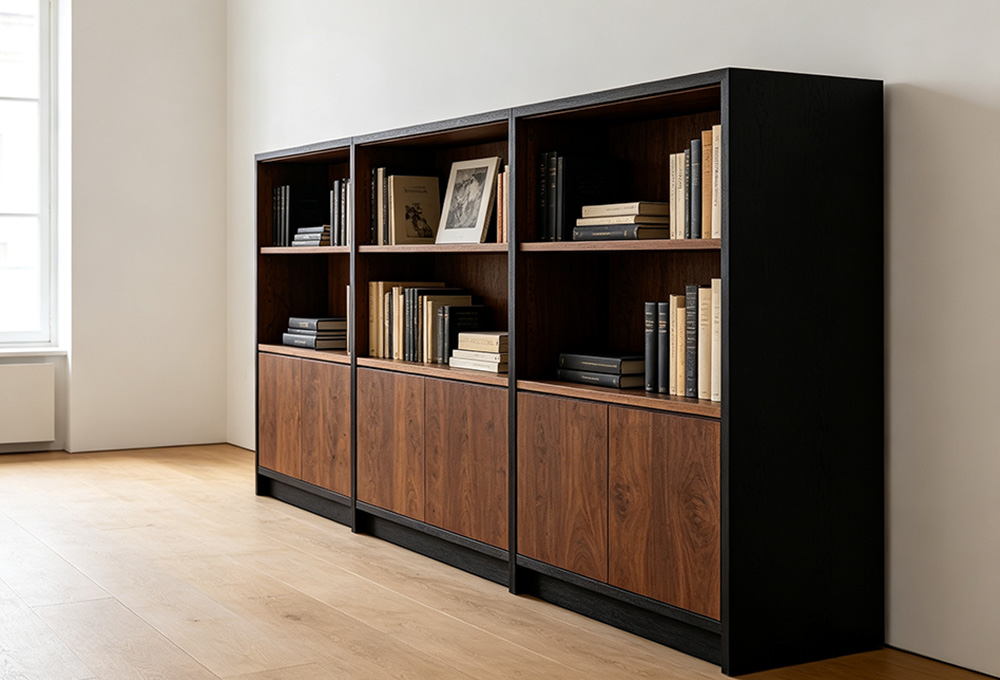
Standardized Installation Best Practices
Even the best wholesale wall bookcases will not work well if they are not installed correctly. For a large library project, it is strongly recommended to hire professional installers. They will make sure the cabinets are level and straight, that they are fixed firmly to the wall, and that the whole row looks even. If your own staff will do the work, they must follow the manufacturer's instructions very carefully. Tall cabinets must be anchored to the wall studs for safety. In places where there are earthquakes, you should also add special seismic fittings. Use a laser level to keep the rows straight, and leave a small gap for the floor if it is not perfectly flat. When the cabinets arrive, label each one so you know which part of the plan it goes to. This makes sorting and placing them much easier. Good, standard installation not only makes the library look neat but also makes the shelves last longer and keeps readers safe.
1. Hire professional installation teams: For a big order of cabinets, it is best to have experts do the construction work.
2. Wall stud anchoring is mandatory: Fixing the shelves to the wall is not optional; it is a critical safety rule.
3. Adopt leveling tools: Laser levels help you make sure the rows of cabinets are straight and uniform.
4. Arrange cabinets against the floor plan: Label each delivered cabinet so it matches the layout drawing.
5. Conduct on-site acceptance upon delivery: Check every cabinet for damage during shipping before the installers leave.
Following these standards turns a set of separate cabinets into one stable and well-organized storage system.
Daily Maintenance and Long-Term Expansion Planning for Bookcases
Taking care of your wholesale wall bookcases regularly is the main way to make them last longer. You should set up a standard routine for maintenance. This includes dusting every week, checking and tightening the hardware fittings every month, and fixing any wobbly frames or sagging shelves as soon as you see them. Train the librarians on the right way to stack books so the weight is spread evenly and does not cause uneven wear. At the same time, you need to plan for the future. Choose modular cabinets that can be rearranged if the collection grows or the library is remodeled. Leave space in the plan to add more power sockets, electronic screens, or RFID book-tracking equipment in the future. If you take good care of the bookshelf system, it can serve the community reliably for many years.
1. Formulate regular cleaning schedules: Dusting every week stops dust from building up and harming the books and the shelf surfaces.
2. Inspect hardware fittings periodically: Check for loose screws every month to find and fix problems early.
3. Standardize librarians' stacking operations: Show the staff how to distribute the weight of books evenly to make the shelves last longer.
4. Select modular cabinets: Choose units that can be moved, added to, or taken away to adapt to changes in the collection.
5. Reserve space for intelligent upgrades: Leave room in the design for new electronic equipment that might be installed later.
Taking good care of the cabinets is an active way to protect the money you spent and to keep the library running smoothly for a long time.
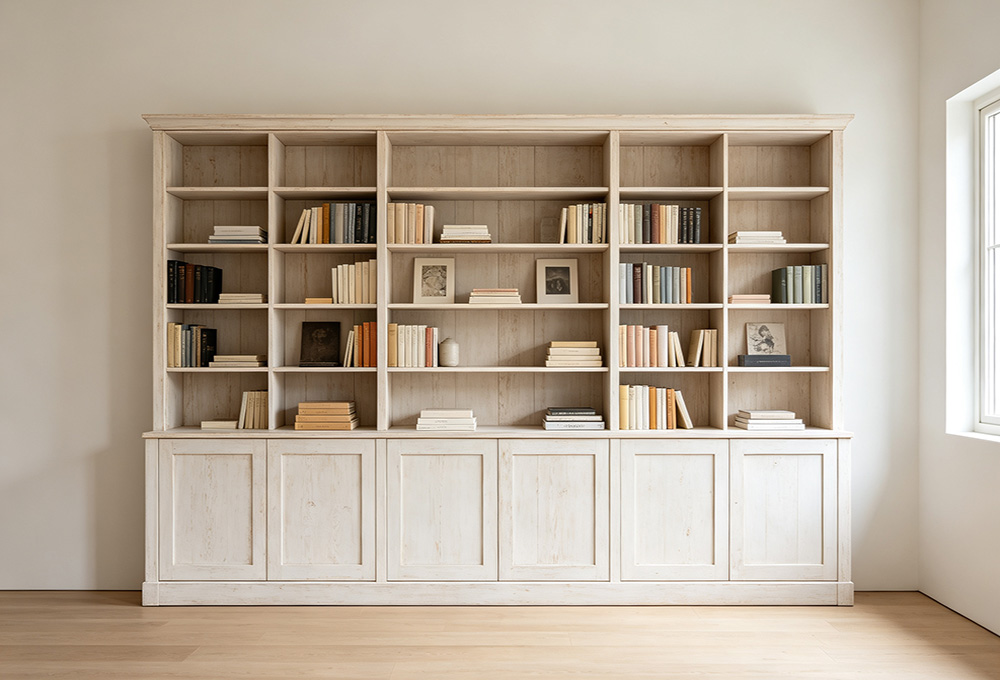
Choosing the right wholesale wall bookcases for a library is about much more than just filling up the wall space. It is about building a reading environment where people can easily find books, keep them tidy, and protect them well. Every single step in this process, from picking the materials, taking measurements, planning the budget, finding a good supplier, to installing and caring for the shelves, decides how well the whole system will work over time. If you use all the practical skills from this guide, you can balance the costs, quality, and function of your project. Whether you are in charge of a small school library or a large city public library, the main rules are always the same. Plan carefully, buy wholesale wisely, install correctly, and maintain the shelves constantly. By doing this, you create a space that is safe and organized for the readers and helps the library use its budget well.
FAQ
1. What is the typical service life of wholesale wall bookcases in library environments?
With regular daily care, high-quality wholesale wall bookcases can stay in good working condition for 20 to 30 years. Steel and solid wood cabinets are the longest-lasting. Standard melamine-faced engineered wood panels will usually last around 15 to 20 years under normal use.
2. How to determine the appropriate shelf depth matching your collection?
The standard depth for library shelves is between 25 and 30 centimeters. This fits most ordinary books. For large art books, atlases, and big reference books, you should use shelves that are 35 centimeters deep or more. Always measure your tallest and widest books before you place a wholesale order.
3. Can wholesale wall bookcases be customized for irregular special spaces?
Yes. Most wholesale suppliers offer custom work. This includes non-standard sizes, corner cabinets, and adjustable parts. Before you order in bulk, tell the manufacturer about all the special features of your space so they can make sure the cabinets will fit perfectly.
4. What is the regular production lead time for wholesale wall bookcase orders?
The time it takes to make the order depends on the manufacturer and the size of the order. It is usually between 4 and 12 weeks. Custom orders and very large orders will take longer to produce. Confirm the timeline with your supplier while you are planning to avoid delays with the library renovation.
5. Are eco-friendly sustainable wholesale wall bookcase options available for libraries?
Yes. Many manufacturers now provide greener choices. These include FSC-certified solid wood, steel made from recycled materials, and coatings that are safe and have low VOCs. If you want the library to be more sustainable, ask the suppliers for their environmental certificates and documents while you are choosing.