
Guide to Wholesale Dining Tables for Restaurants
A successful restaurant depends on many small but critical details, and your dining tables are one of the most important. These tables affect your venue’s layout, customer comfort, brand atmosphere, and long‑term operations. For restaurant owners, managers, and new operators, buying quality wholesale dining tables is much cheaper and more practical than buying retail single pieces. Wholesale purchases let you keep a consistent look across your dining space. They also give you commercial‑grade durability and lower your total furniture costs. This complete guide covers every key step to select, buy, and maintain wholesale dining tables. So you can make smart, long‑lasting choices for your food business.
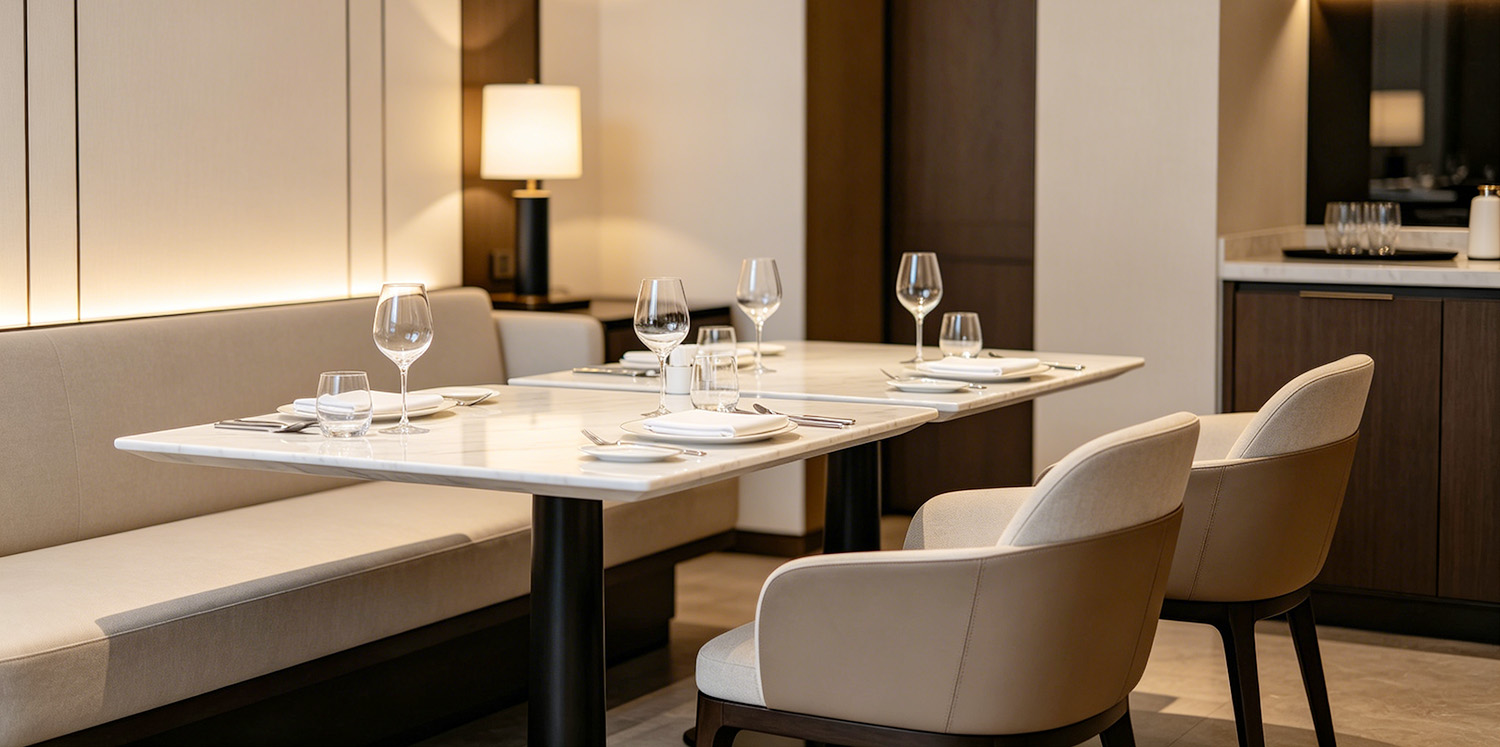
What Type of Dining Tables Suit Restaurant Use?
Most household dining tables cannot handle the heavy traffic and constant use of a commercial restaurant. So picking the right table type is the first basic step for your daily operations. Commercial‑grade wholesale dining tables are built to stand up to non‑stop guest use, regular cleaning, and server movement. They are very different from home furniture. Each table type works best for a specific layout and dining style. When you match the table design to your business model, you directly improve customer experience and how you use your space. Below are five practical and popular table types for all kinds of restaurants.
• Standard Fixed Dining Tables: This is the most common choice for casual diners, family restaurants, and mid‑tier eateries. These tables have sturdy fixed frames and flat tops. Their stable structure resists wobbling even after years of heavy use. They need very little maintenance and fit most restaurant decor styles. They work perfectly for steady daily customer flow.
• Stackable Dining Tables: These tables are made for flexible space management. You can stack and store them when not in use. They work great for restaurants that host private events, handle peak‑hour crowds, or face seasonal dining surges. You can adjust your dining capacity quickly without extra storage pressure.
• Folding Dining Tables: These are lightweight and portable. Folding wholesale dining tables are ideal for pop‑up restaurants, outdoor dining areas, and small cafes. They balance durability and flexibility. You can easily move, clean, and rearrange them for different seating layouts.
• Booth‑Style Dining Tables: These tables are matched with restaurant booth seats. They create intimate and comfortable dining spaces. They are widely used in fine dining restaurants, burger joints, and dessert shops. They help increase how long customers stay and improve the overall dining experience.
• High‑Top Bar Dining Tables: These tables have elevated heights. They suit bar‑style restaurants, cocktail lounges, and casual fast‑food spots. They create a relaxed and trendy atmosphere. They are perfect for single guests or small groups who want a quick meal.
Mainstream Materials for Restaurant Dining Tables
The table material decides how durable it is, how well it resists stains, how easy it is to clean, what style it has, and its long‑term cost for your wholesale dining tables. Restaurants face spills, scratches, and daily wear all the time. So you should pick materials based on commercial practicality, not just good looks. Different materials have different pros, cons, and best uses. They let you choose options that fit your budget, brand style, and how much maintenance you can do. When you understand these mainstream materials, you avoid low‑quality purchases that need frequent replacement. Then your tables will serve your business for years.
• Solid Wood: This is a timeless, high‑end material. It gives a warm texture and natural beauty. It works best for farm‑to‑table restaurants, traditional diners, and fine dining venues. Premium solid wood wholesale dining tables offer great stability. You can refinish them when scratched. But they need regular waxing and moisture care to prevent warping or cracking.
• Engineered Wood/Melamine: This is the most cost‑effective commercial option. Its surface is scratch‑resistant, stain‑proof, and easy to clean. This material is lightweight and durable. It comes in many colors and wood grain patterns. It is perfect for fast‑food restaurants, casual cafes, and high‑traffic chain eateries with tight budgets.
• Sintered Stone: This is a modern premium material that dominates today’s restaurant designs. Sintered stone tables resist heat, water, scratches, and stains. They handle coffee spills, hot plates, and daily friction very well. They need almost no maintenance. They fit minimalist, modern, and luxury restaurant styles.
• Metal (Iron/Stainless Steel): This material offers ultra‑high durability and stability. Metal‑framed wholesale dining tables resist rust, deformation, and heavy impact. They are easy to sanitize. That makes them a top choice for fast‑food chains, industrial‑style restaurants, and outdoor dining areas exposed to wind and rain.
• Glass: Tempered glass tabletops create a bright, spacious, and elegant dining atmosphere. They are easy to clean. They match modern, minimalist, and light luxury decor. Thickened commercial tempered glass ensures safety and compression resistance. It works well for dessert shops, tea houses, and high‑end casual restaurants.
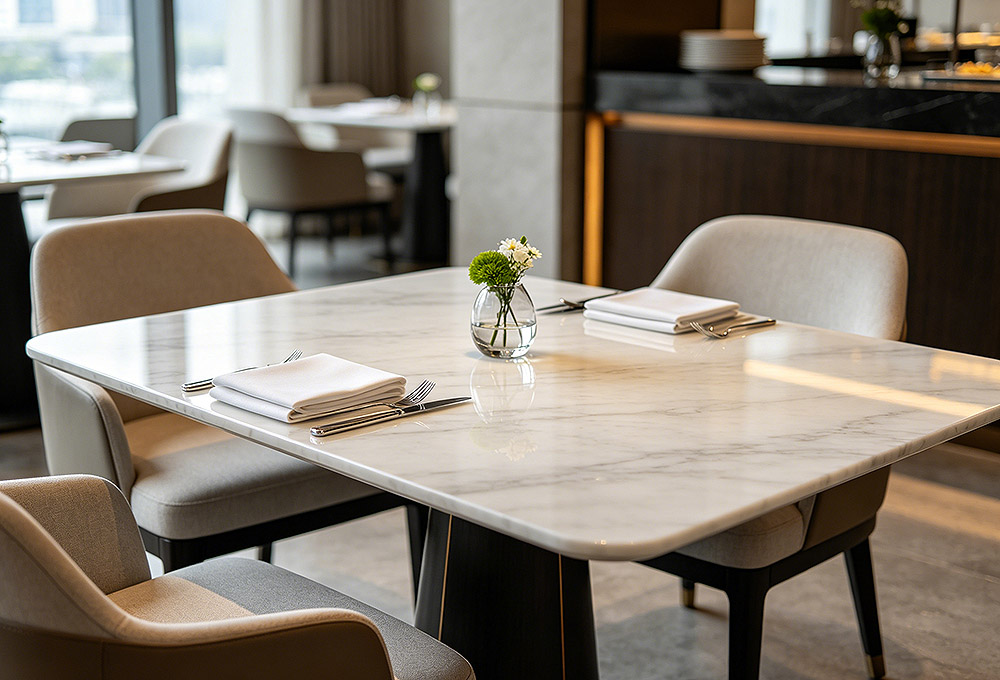
How to Choose the Right Size and Shape for Dining Tables
Table size and shape directly affect your restaurant’s space use, guest comfort, and service efficiency. If you choose the wrong size, you get cramped dining spaces, crowded walkways for servers, or wasted floor area. That hurts customer experience and lowers your revenue. So when you select wholesale dining tables, you must look at your floor plan, average group size, and aisle space standards. Each shape and size serves different seating needs and space layouts. There are universal commercial sizing rules to follow for the best results.
• Square Tables: These are compact and symmetrical. Standard 24×24‑inch or 30×30‑inch square tables fit two to four guests. They are perfect for small dining areas, solo diners, and couples. You can combine them for larger groups. They offer flexible layout options for casual cafes and small family restaurants.
• Rectangular Tables: These are the most space‑efficient option. Common sizes are 30×48 inches for four guests and 36×60 inches for six guests. Rectangular wholesale dining tables line up neatly with walls and aisles. They maximize seating capacity for medium and large restaurants. They also make it easier for servers to move around.
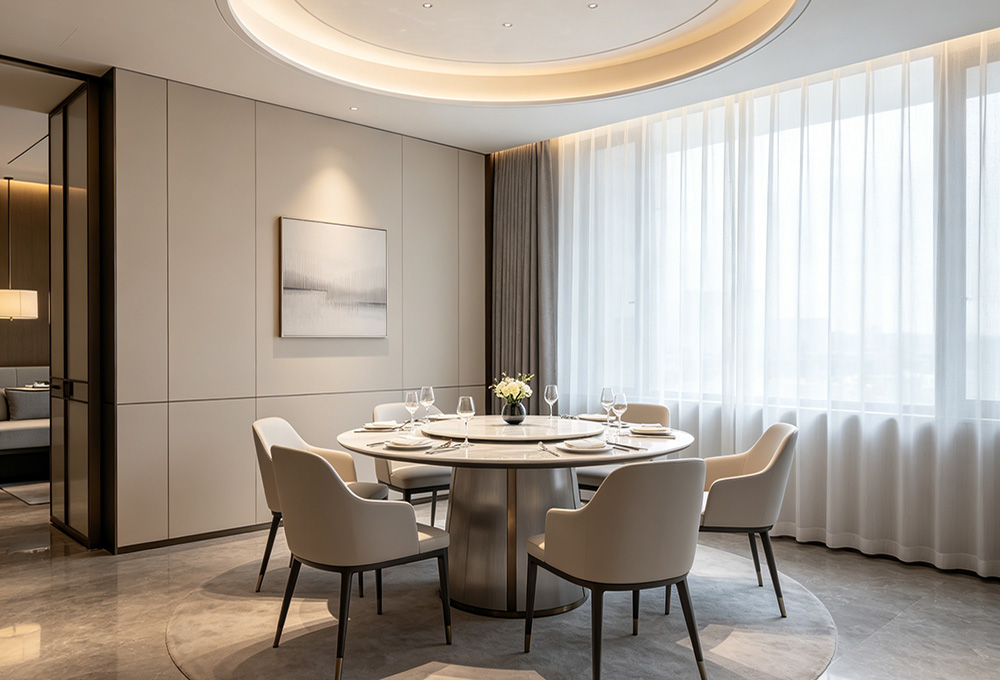
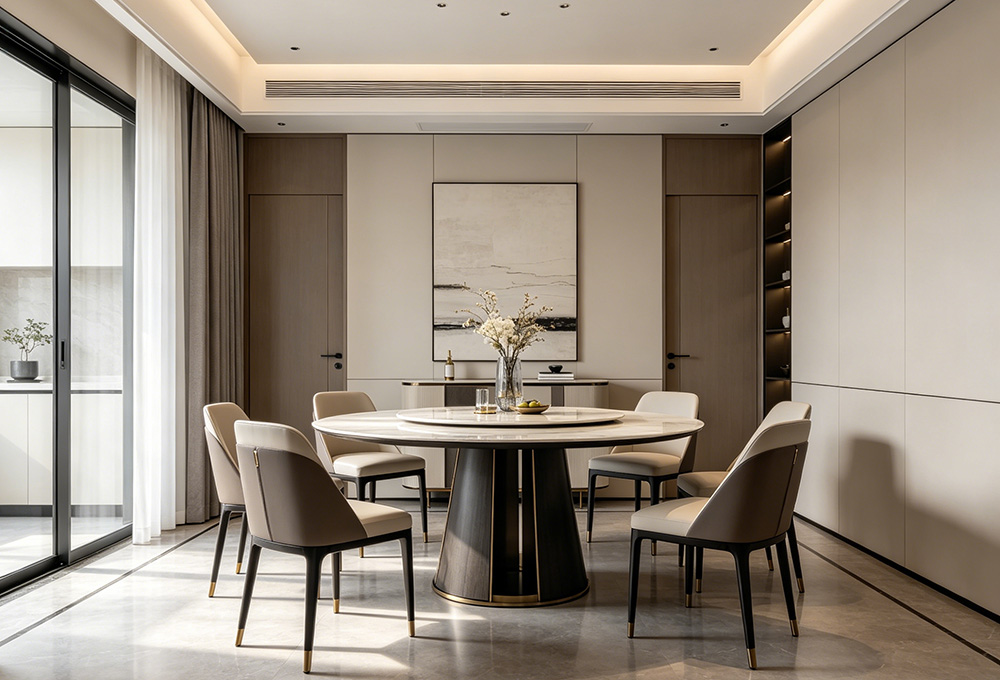
• Round Tables: A standard 36‑inch round table seats four guests. Larger 48‑ to 60‑inch options seat six to eight guests. Round tables have no sharp corners, so they boost dining safety. They also encourage social interaction among guests. They are ideal for family‑style restaurants, banquet halls, and casual group dining venues.
• Oval Tables: These combine the benefits of round and rectangular tables. Oval models have smooth edges and more seating space without taking up extra floor area. They suit mid‑tier fine dining restaurants and private dining areas. They balance good looks and practicality.
• Size Matching Rules: Always leave at least 36 inches of aisle space between tables. That lets servers move and guests walk. For fine dining venues, increase the gap to 48 inches. That gives more privacy and comfort. It ensures a smooth dining and service process.
Wholesale Dining Table Selection for Different Restaurant Types
Different restaurant business models have different needs for table style, durability, size, and function. A table that works perfectly for a fast‑food chain may not work for a high‑end fine dining restaurant. And the opposite is also true. So you should customize your wholesale dining tables based on your venue’s positioning. That ensures consistent brand styling, better space use, and a matched customer experience. Below are targeted selection suggestions for mainstream restaurant formats. They help you find the most suitable table configurations.
• Fast‑Food Restaurants: Focus on lightweight, easy‑to‑clean, and scratch‑resistant tables. Use melamine or metal wholesale dining tables with fixed compact sizes. Simple square or rectangular designs work best. They support rapid customer turnover and quick daily sanitization. That is ideal for high‑traffic, fast‑paced service.
• Casual Cafés & Tea Shops: Choose lightweight glass, small solid wood, or simple metal tables with delicate styling. Small round or square tables create a relaxed, cozy atmosphere. They are good for leisure dining and socializing. That matches the slow‑paced habits of café customers.
• Fine Dining Restaurants: Pick high‑grade solid wood or sintered stone wholesale dining tables. They should have elegant lines and a premium texture. Larger rectangular or round tables with stable reinforced structures enhance the upscale dining feel. Moderate spacing ensures guest privacy and comfort.
• Bar & Pub Venues: Select high‑top bar tables and small portable round tables. Pair them with bar stools. Wear‑resistant metal and waterproof tabletops are essential. They resist drink spills and frequent guest touching. That suits the casual, trendy, high‑frequency environment of bars.
• Family & Buffet Restaurants: Focus on spacious rectangular and large round tables. They need strong load‑bearing capacity. Sturdy solid wood or thick sintered stone models work well for multi‑person family dining and buffet service. Durable structures withstand long hours of peak use.
Core Purchasing Factors for Wholesale Dining Tables
Buying wholesale dining tables in bulk is a long‑term business investment, not a one‑time expense. So you need to check several core factors. That helps you avoid defective products and hidden costs. Many restaurant owners only look at the upfront unit price. They ignore durability, compliance, and after‑sales service. That leads to frequent replacements and extra maintenance fees. When you master these key purchasing points, you can balance cost, quality, and practicality. Then you will get cost‑effective and long‑lasting furniture for your restaurant.
• Commercial‑Grade Durability: Focus on tables with reinforced frames, thick tabletops, and stable base structures. They should resist wobbling, scratching, and water damage. Commercial‑grade furniture is tested for long‑term, high‑frequency use. It is much more durable than home furniture. That reduces how often you need to replace it.
• Cleaning & Sanitation Convenience: Restaurant tables face daily food spills, oil stains, and drink residue. Choose smooth, non‑porous tabletop materials. They are easy to wipe clean. They also resist mold and bacteria growth. That meets food service hygiene standards and saves you daily cleaning time.
• Budget & Cost Performance: Balance the upfront wholesale cost with the long‑term service life. Avoid very cheap low‑quality tables that deform or fade quickly. Also skip over‑priced designs with unnecessary features. Pick cost‑effective wholesale dining tables that match your venue’s position and how long you will use them.
• Batch Consistency & Customization: Make sure your bulk‑ordered tables have the same color, size, and style. That gives you a unified restaurant look. Choose suppliers that support small customizations, like logo engraving or size changes. That helps your unique brand style and space layout.
Budget‑Saving Tips for Wholesale Dining Table Purchases
Controlling your furniture costs is key to optimizing your restaurant’s early investment and operating profit. Many new restaurant owners spend too much on unnecessary table features. Or they pay extra fees for retail‑style bulk orders. Good budget planning for wholesale dining tables can cut your furniture costs by 20% to 30%. And you do not lose quality or durability. These practical budget‑saving tips are made for restaurant bulk buyers. They help you get the most value from your purchase.
• Order Standard Sizes in Bulk: Custom‑sized tables usually add extra mold and processing fees. When you choose mainstream standard‑size wholesale dining tables, you lower the unit cost. You also shorten production times. And you qualify for bigger bulk order discounts from suppliers.
• Match Materials to Usage Scenarios: Do not use high‑end materials for low‑traffic areas. Use affordable melamine tables for staff dining areas and high‑traffic fast‑food zones. Save sintered stone or solid wood tables only for customer‑facing core dining spaces.
• Negotiate Bulk Order Discounts: Most furniture suppliers offer lower prices for larger orders. When you buy more than 20 tables, actively negotiate the unit price. Also ask for free shipping and free installation. That reduces your total buying and shipping costs.
• Choose Seasonal Wholesale Deals: Furniture suppliers often run special promotions during off‑seasons. If you buy your wholesale dining tables during a slow season, you can get exclusive discounts and free after‑sales maintenance.
Daily Maintenance & Lifespan Extension Methods
High‑quality wholesale dining tables can serve your restaurant for five to ten years with proper care. But poor daily care can cause fading, scratching, and structural damage in just one to two years. Restaurant tables face harsh daily use. So you need specific maintenance routines for each material. That extends their service life and keeps your dining area looking neat and professional. Simple daily care steps take little time. But they greatly reduce your long‑term replacement and repair costs.
• Daily Cleaning Rules: Every day, wipe tabletops with a soft damp cloth. That removes dust and stains. Do not use harsh abrasive cleaners. They scratch the surface coating. For oil stains, use a neutral detergent. Then dry the tabletop right away. That stops water from soaking in and prevents mold.
• Material‑Specific Maintenance: For solid wood tables, polish them every three months. That keeps their shine and stops cracking. For sintered stone and glass tables, use regular cleaners. They need no special upkeep. For metal frames, check regularly for rust spots. Apply anti‑rust oil when needed.
• Usage Protection Measures: Use heat‑insulating mats for hot plates and coasters for drinks. That avoids high‑temperature damage and water marks. Do not drag tables when cleaning or changing the layout. That prevents frame loosening and floor scratching.
• Regular Inspection & Repair: Once a month, check table legs, screws, and joints. Tighten any loose parts right away. Timely small repairs stop structural wobbling. That extends the overall service life of your wholesale dining tables.
How to Select Reliable Wholesale Dining Table Suppliers
The supplier’s quality directly decides the product quality, delivery speed, and after‑sales guarantee for your wholesale dining tables. A reliable supplier gives you stable commercial‑grade products, on‑time batch delivery, and professional after‑sales service. But an unqualified supplier may send defective goods, delay shipments, or refuse to help with repairs. Choosing the right partner is the final key step for a successful wholesale purchase of your restaurant furniture.
• Verify Commercial Qualifications: Focus on suppliers that have professional commercial furniture production qualifications and a lot of restaurant cooperation experience. Avoid small workshops that only make home furniture. Their products cannot meet commercial durability and hygiene standards.
• Check Product Samples & Cases: Before you order in bulk, ask for physical samples or real restaurant installation examples. Check the table stability, material texture, and workmanship details. Confirm that the products match your expected quality.
• Confirm Delivery & MOQ Terms: Clearly state the minimum order quantity, production time, shipping date, and damage compensation terms in advance. Formal suppliers give you clear contracts. That avoids late delivery or damaged goods with no refund.
• Evaluate After‑Sales Service: Choose suppliers that offer a long‑term warranty and free repair or replacement for defective products. Good after‑sales support means no worries during the long‑term use of your wholesale dining tables.
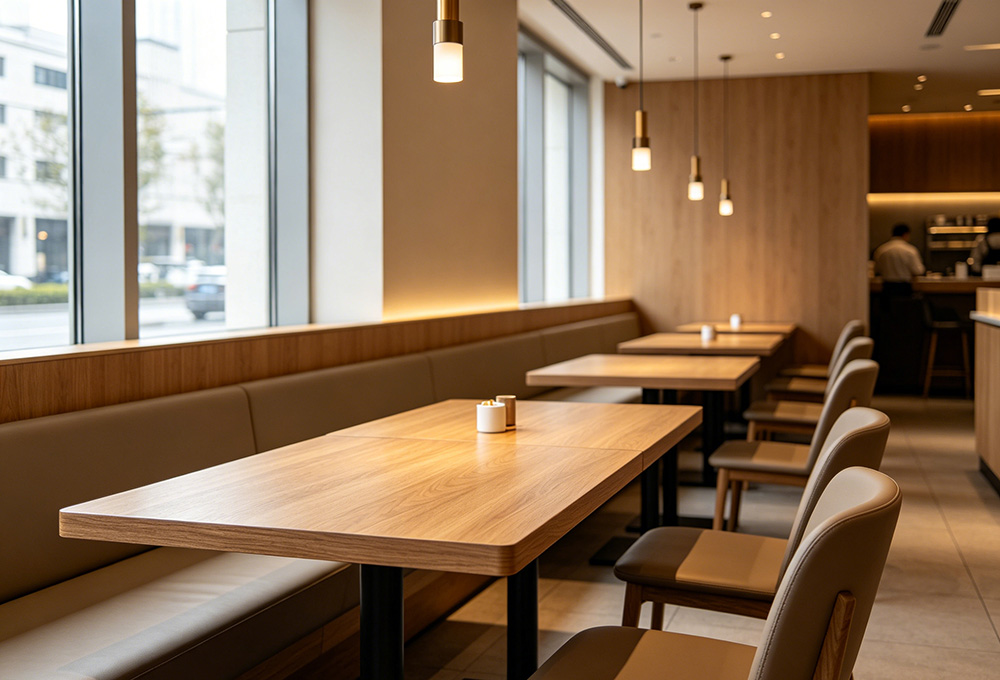
Choosing the right wholesale dining tables for your restaurant is a complete process. It involves table type, material, size, business fit, budget, maintenance, and supplier selection. As a core part of your restaurant’s hardware, high‑quality wholesale dining tables improve your dining space layout and customer experience. They also lower your long‑term operating costs and boost your brand’s overall image. When you follow the step‑by‑step selection and buying rules in this guide, you can avoid common mistakes. You will choose cost‑effective and durable commercial tables that match your restaurant. That lays a solid foundation for steady daily operations and long‑term business growth.
FAQ
1. Why should restaurants choose wholesale dining tables instead of retail ones?
Wholesale dining tables are made specifically for commercial restaurant use. They have higher durability, more stable quality, and uniform batch styles compared to retail home tables. Buying in bulk also greatly lowers the cost per table. Professional suppliers provide commercial after‑sales services. So they are better for long‑term restaurant needs.
2. What is the most durable material for commercial restaurant dining tables?
Sintered stone and thick stainless steel metal are the most durable choices for high‑traffic restaurants. They resist scratches, stains, high heat, and water damage. They need almost no daily care. For venues that want a nice look and high quality, solid wood with a surface anti‑wear treatment is also a durable long‑term option.
3. What standard table size fits most casual restaurants?
For most casual restaurants, a 30×48‑inch rectangular table for four guests and a 36‑inch round table for four guests are the most practical standard sizes. They balance space use and guest comfort. They work well for most daily dining groups. And they are easy to arrange in a uniform layout for service.
4. How many wholesale dining tables should a new restaurant purchase initially?
The number depends on your dining area size and expected customer flow. Small boutique restaurants usually need 10 to 20 tables. Medium‑sized casual restaurants need 30 to 50 tables. It is a good idea to keep 10% extra tables as spares. That helps you handle peak dining hours and future layout changes.
5. Can wholesale dining tables be customized for restaurant brand styles?
Yes, most professional wholesale furniture suppliers support personal customization. You can change the table size, color, and surface finish. You can even engrave your restaurant’s brand logo on the tabletop. Customized wholesale dining tables help you create a unique brand dining atmosphere. They also make customers remember your restaurant better.