
Key Care Tips for Marble Dining Table Tops
You have bought a stunning marble dining table, or you are about to buy one. It is elegant, sure, but marble needs real care because it is soft and porous. Do not worry, though. A few simple daily habits will keep it looking flawless for years. Whether you bought a high-end piece or scored a deal on a wholesale dining table, these tips apply. And remember, good care protects whatever dining table prices you paid.

Daily Cleaning – Keep It Simple
Stick to mild dish soap and warm water for everyday messes. Spray lightly, wipe with a soft microfiber cloth, and never scrub hard. Always dry immediately with a clean towel to avoid water spots.
- Use only pH-neutral dish soap, no lemon or vinegar formulas.
- Dilute properly, one teaspoon per two cups of water.
- Wipe in gentle circles, avoid aggressive back-and-forth.
- Rinse your cloth often, to prevent spreading dirty water.
- Pat dry right away, never let it air-dry.
For dried food, just lay a damp soapy cloth over the spot for a minute and then wipe gently. Never scrape with metal tools. A clean, dry surface every night is your best defense.
Sealing – Your Invisible Shield
Marble absorbs liquids without a sealer. Do the water test every 6 months – if water soaks in within 5 minutes, you need to reapply. Wipe on, wait, then buff off the excess.
- Choose a solvent-based impregnating sealer for deep penetration.
- Apply in a well-ventilated area because fumes can be strong.
- Let it cure for at least 24 hours before using the table.
- Reapply sooner if water stops beading, usually yearly.
- Test a small hidden corner first to avoid darkening.
Sealing takes just 20 minutes twice a year. It is cheap insurance against permanent stains. Lighter marbles need sealing more often, so keep a log of your last application. Even with a wholesale dining table, sealing makes a significant difference.
Heat Protection – Never Direct Contact
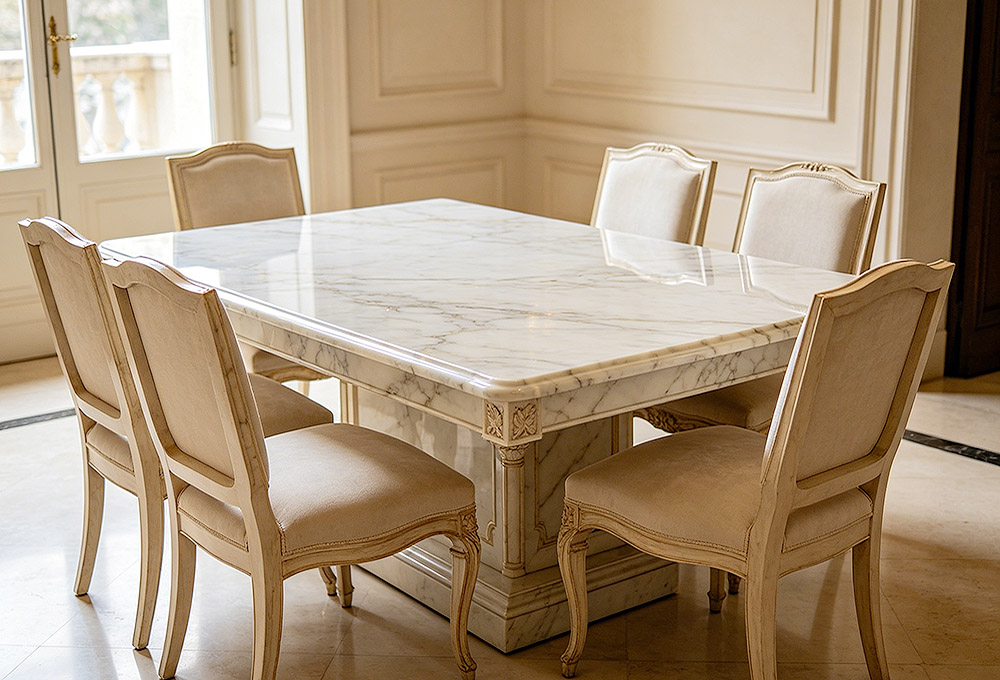
Never put hot pots or pans directly on marble because heat causes cracks and dull rings. Always use trivets, coasters, or thick folded towels. Even a warm pizza box can leave a mark.
- Use trivets at least ½ inch thick for good insulation.
- Never place electric warmers directly on the surface.
- Always use coasters for hot mugs, ceramic transfers heat.
- Use a folded napkin as a buffer for warm plates.
- Keep a dedicated heat mat on the table for big meals.
Sunlight also heats the stone unevenly, use curtains during peak hours. A honed finish handles heat slightly better than polished. When comparing wholesale dining table options, remember none are heat-proof.
Stain Management – Act Fast
Blot spills immediately and do not wipe. For tough stains, make a paste with baking soda and water (or acetone for oil), apply, cover with plastic, and leave for 24 hours. This draws out the pigment.
- Blot red wine with salt, it absorbs liquid fast.
- For coffee, use a 3% hydrogen peroxide poultice, test first.
- Grease spots? Apply dish soap directly, then rinse well.
- For unknown stains, start with plain water, gentlest first.
- Always rinse the poultice thoroughly and dry right away.
The longer a spill sits, the deeper it goes. Keep a spray bottle of soapy water handy during parties. Some premium wholesale dining table brands offer better stain resistance – worth asking about.
Scratch Prevention – Lift, Don't Drag
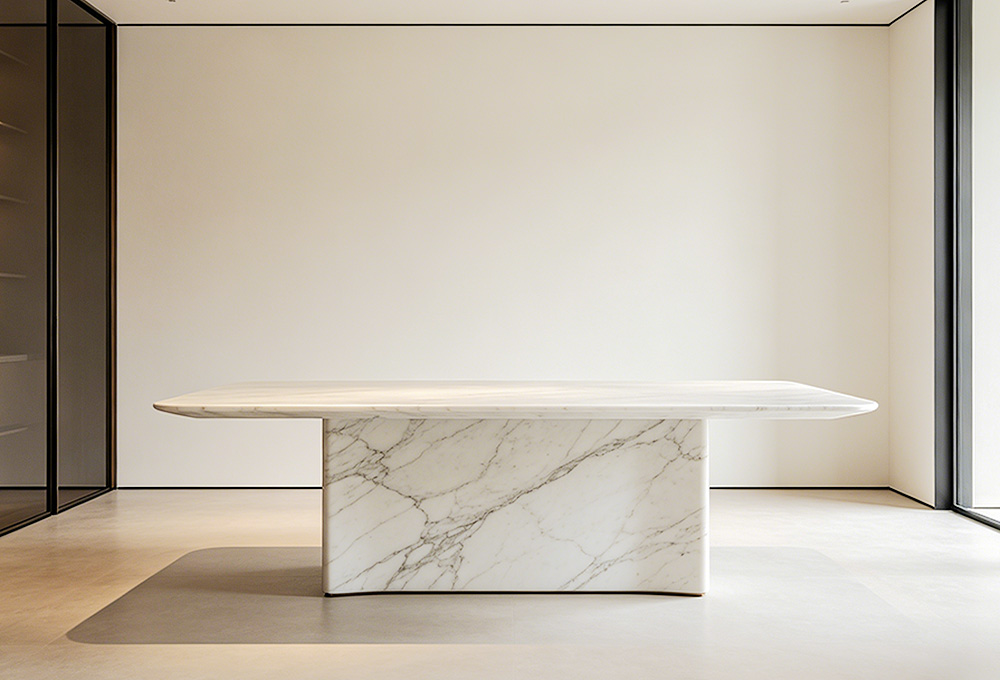
Marble scratches easily – even ceramic plates and rough vase bottoms leave lines. Always lift dishes instead of sliding them. Use placemats and felt pads under all decorative items.
- Put felt pads under vases, candle holders, and centerpieces.
- Keep pet claws trimmed because they can leave marks.
- Avoid abrasive sponges, stick to soft microfiber.
- Always use a cutting board for bread or pizza.
- For light scratches, use a marble repair kit, follow instructions.
Also, stack plates gently and never slide serving platters. A honed finish hides scratches better than polished. If you have kids, use a protective mat during crafts.
Polishing – Bring Back the Gloss
Marble loses shine over time. Use a professional-grade polish every 3–4 months. Apply in small circles, let it haze, then buff vigorously with a clean towel for a brilliant finish.
- Choose a polish made specifically for marble.
- Apply a thin, even layer, thick coats are hard to buff.
- Use high-speed buffing, elbow grease gives the best shine.
- Polish only after cleaning and sealing, never on dirt.
- Test a small area first, some polishes darken light stone.
Never use furniture wax because it leaves a sticky film. If your table stays dull, check the sealant. Polished finishes need more upkeep but look stunning. Regular polishing keeps that luxury feel alive.
Dealing with Etching – Don't Panic
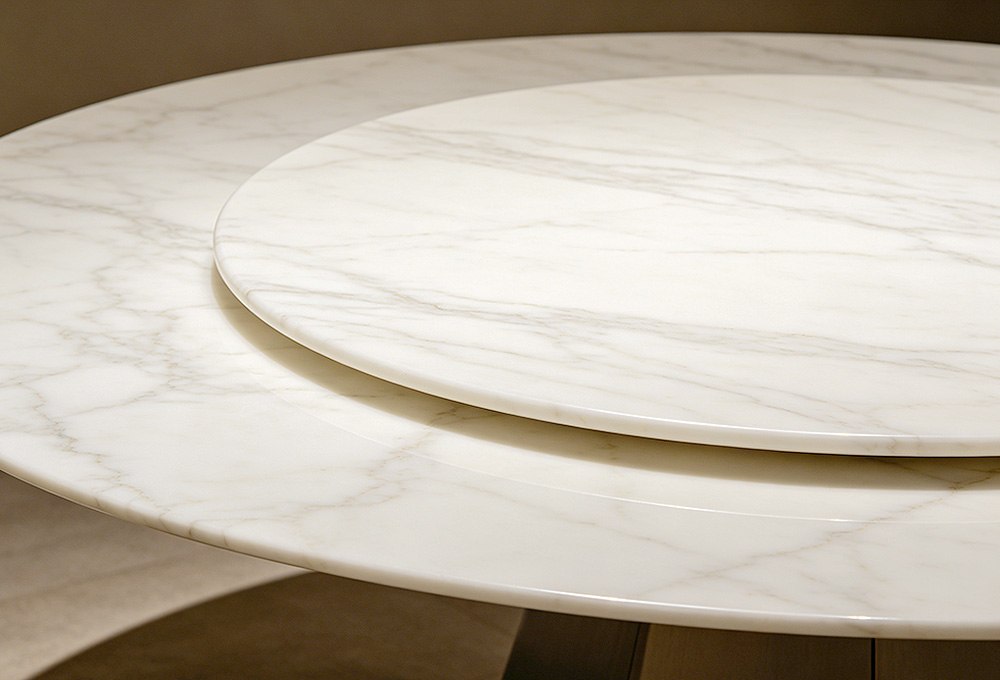
Etching is a dull spot from acid (citrus, wine, soda). Use a marble etch remover paste – rub in, let sit, rinse. For deep etching, call a pro. Prevention is best – use coasters always.
- Keep lemon wedges and tomato sauces away from the edge.
- After acidic spills, use a neutralizing baking-soda spray.
- For minor etching, a fine-grit diamond pad can help.
- Never use abrasive powders because they worsen the damage.
- If etching persists, call a stone restoration specialist.
Think of etching like a sunburn – it happens fast. Set coasters on every glass. Some marble types are more acid-sensitive than others. A good sealant reduces risk but does not eliminate it.
Long-Term Maintenance – Seasonal Deep Care
Every six months, deep-clean: wash, dry, and reapply sealer. Check edges for chips. Rotate the table if it is near a window to avoid uneven fading. Do not forget extension leaves – they need care too.
- Schedule deep-clean days on your calendar, pick a weekend.
- Move the table to clean the floor underneath.
- Reapply sealant after deep-cleaning, never on a wet surface.
- Tighten any loose screws or brackets on the base.
- Keep a maintenance log, track when you last polished.
Also, watch humidity levels because extreme changes affect marble. Always lift the table when moving it, never drag it. These steps preserve its beauty and resale value. Good care protects whatever dining table prices you invested.
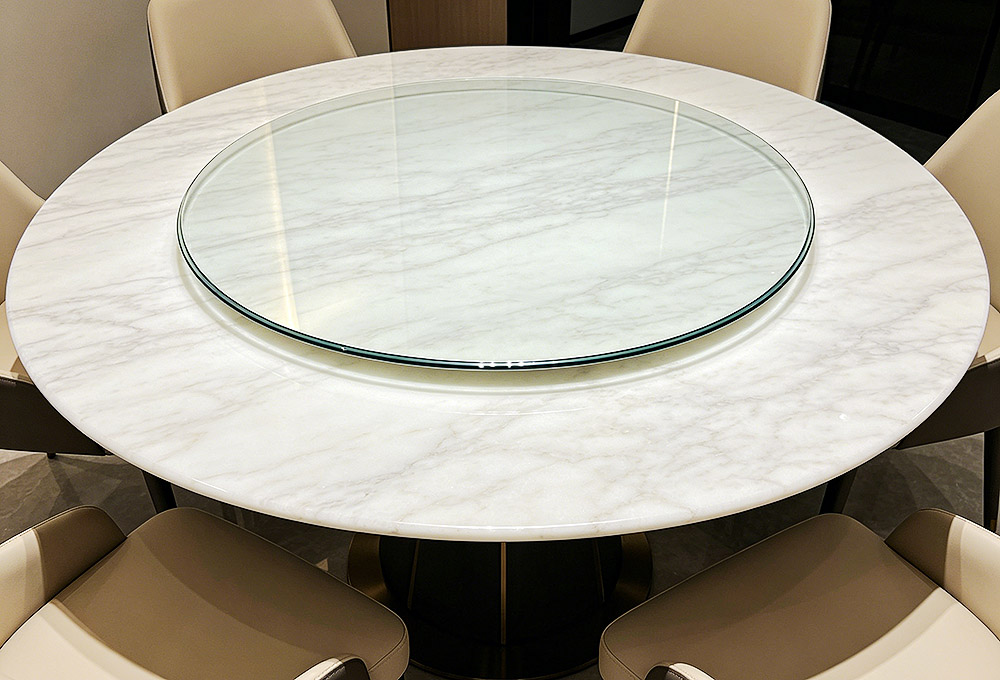
Marble tables are timeless and totally worth it. Follow these simple rules: clean gently, seal regularly, use heat pads, wipe spills fast, and avoid acids. That is it. Your table will stay gorgeous for decades. Even if you scored a great deal on a wholesale dining table, proper care keeps it looking premium. So set that beautiful table, host those dinners, and enjoy every meal without worry.
FAQ
-
Can I use vinegar to clean my marble table?
No – vinegar is acidic and will etch the surface. Use pH-neutral soap or a special marble cleaner instead.
-
How often should I reseal my marble dining table?
Every 6–12 months. Do the water test – if water soaks in within 5 minutes, it is time to reseal.
-
Will a hot pizza box damage my marble?
Yes – even cardboard can trap heat and cause shock. Always use a trivet or thick cloth underneath.
-
Can I fix a deep scratch myself?
Deep scratches need professional honing. Light scratches can be buffed out with marble polishing powder.
-
Is a honed finish easier to maintain than polished?
Honed hides scratches and etches better but is more porous – needs more sealing. Polished is shinier but shows marks more. Choose based on your lifestyle.