
What Is the Most Durable Material for Commercial Restaurant Dining Tables?
Imagine a busy Friday night. Your dining room is full. A server sets a sizzling cast‑iron plate on Table 12. The laminate surface immediately bubbles and peels. That table is unusable for the whole weekend. Each cover averages $80 in revenue, so every idle hour costs you real money. If you have ever replaced restaurant tables after only two or three years, you already know the hard truth: in this business, durability equals profitability. This guide reviews six mainstream materials, shares data from actual commercial projects, and gives honest advice on which ones to choose and which to avoid.
Why the "Home Furniture" Mindset Will Cost You Money
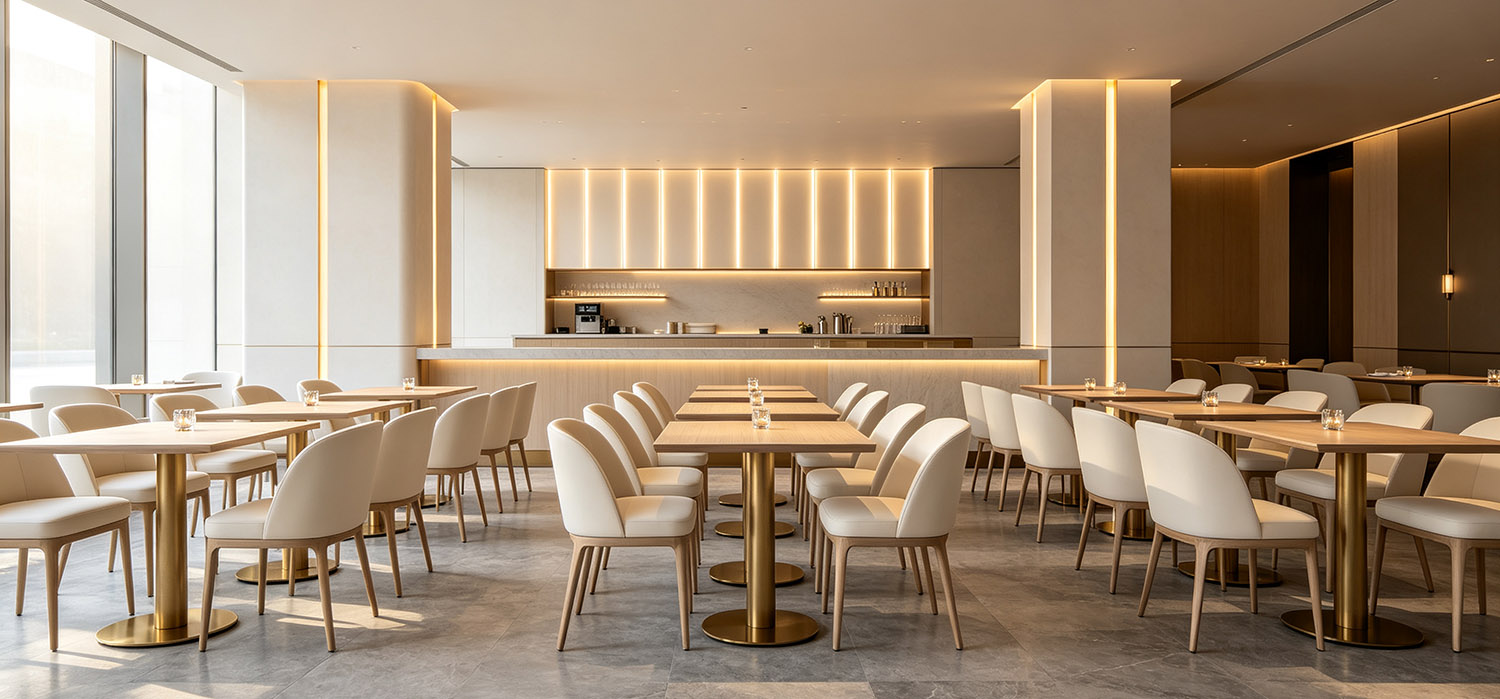
Most restaurant owners overlook a critical number. A residential dining table might be used about 1,000 times over its lifetime. A commercial dining table in a busy casual restaurant reaches that same number in just six weeks. That fact completely changes how you should evaluate a purchase. Spilled drinks and hot plates are not occasional accidents – they happen daily. Staff clean tables two or three times per shift, and the degreasers and sanitizers used can easily destroy cheap finishes. Add uneven floors, heavy trays, and occasional guests sitting on table edges, and you will see why "looks nice in the showroom" is a terrible buying criterion.
Solid Wood: Beautiful, But Only If You Spec It Right
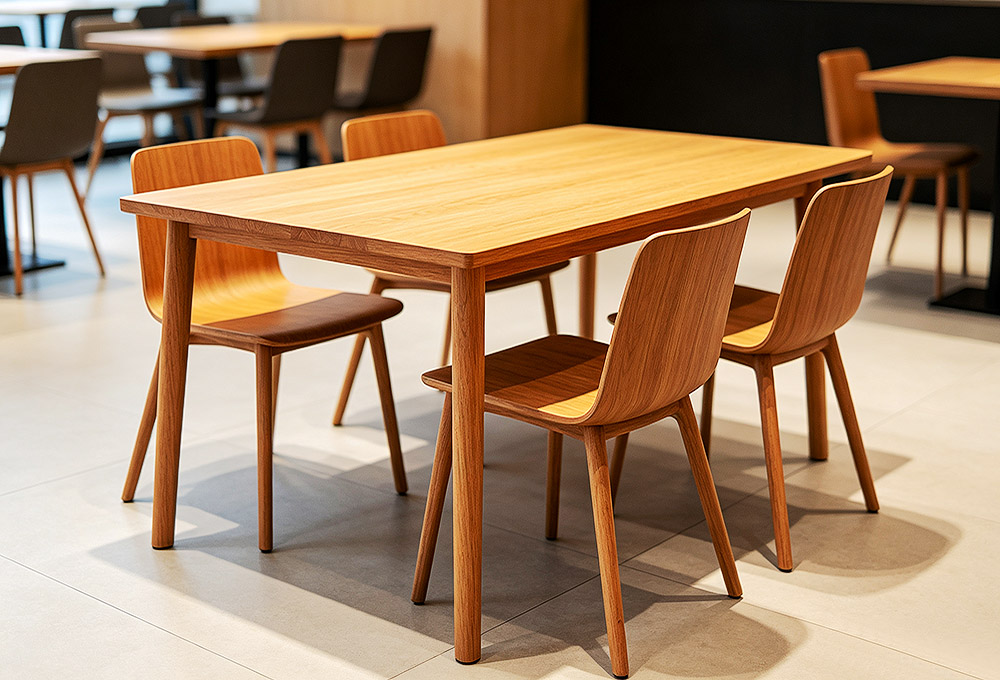
Solid wood remains the most popular material for mid‑to‑upscale restaurants. When the species and craftsmanship are correct, it genuinely lasts 15+ years.
What to look for:
• Hardness is critical – white oak (Janka 1,360) and hard maple (1,450) resist dents far better than softwoods like pine.
• Top thickness must be at least 38mm (1.5") for commercial use; thinner tops warp under heat lamps.
• The finish is everything – insist on two‑part polyurethane or catalyzed lacquer, not standard furniture lacquer.
Honest downside: cold glasses will leave water rings without coasters, and refinishing costs $40–80 per table every few years.
Our verdict: a white oak dining table is a 15‑year asset if your staff wipe spills immediately. If not, read on.
Laminate: The Underrated, High‑Value Workhorse
Laminate has a bad reputation, mostly because people remember the peeling tables from 1990s school cafeterias. Modern high‑pressure laminate (HPL) is a completely different product – it offers the best durability per dollar in the industry.
Core advantages of modern HPL:
• Scratch and wear resistance – keys, trays, and stacked plates rarely leave marks.
• Stain resistance – red wine, coffee, and curry wipe away without a trace.
• Price advantage – $60–120 per top, versus $250+ for quartz.
• Lifespan – 5–8 years in high‑traffic settings, compared to only 2–3 years for cheap veneer.
• Wide design range – highly realistic wood grains, stone patterns, and matte finishes that fool most guests.
Honest caveat: avoid low‑pressure thin laminate, and never place induction warmers or hot pans directly on it. For fast‑casual concepts, a quality laminate dining table is almost always the smartest choice.
Quartz: Set It and Almost Forget It
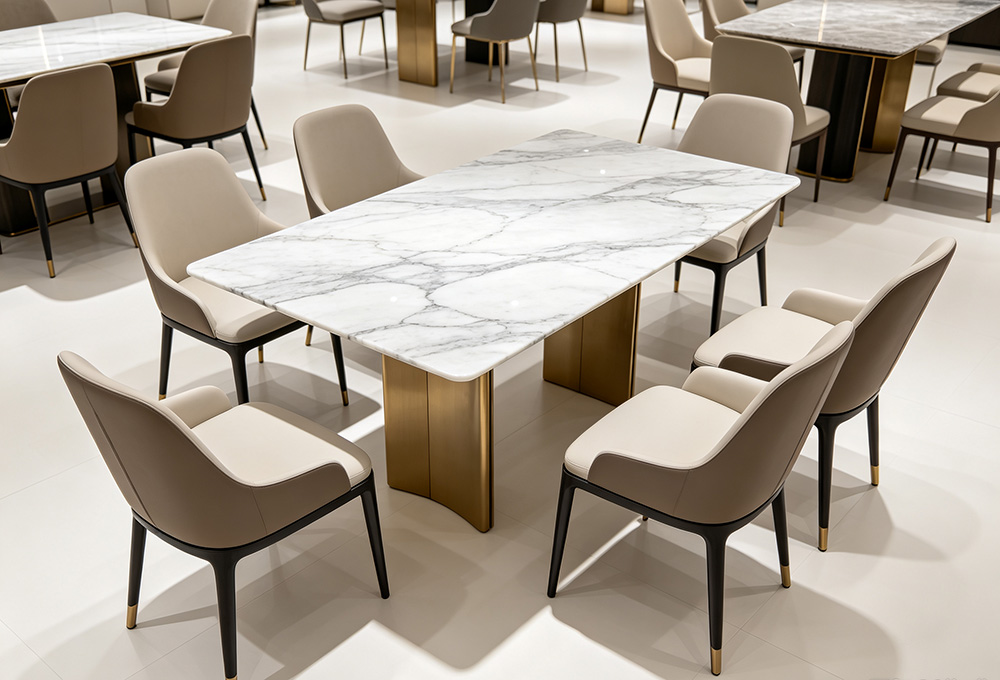
If your budget allows $200–400 per top, engineered quartz is as close to "indestructible" as restaurant surfaces get.
Why operators love it:
• Zero porosity – wine, oil, and vinegar cannot penetrate; no sealing, ever.
• Heat resistance – handles plates up to ~150°C (300°F) without marks.
• Near‑zero maintenance – soap and water is all it needs.
• High consistency – a 40‑location chain can have every table look identical.
Honest downside: quartz is hard but brittle – a heavy metal tray dropped edge‑first can chip a corner, and repairs are visible. It is also very heavy, so ensure your table bases are rated for the weight.
Stainless Steel: Maybe Not the Prettiest, But Absolutely Indestructible
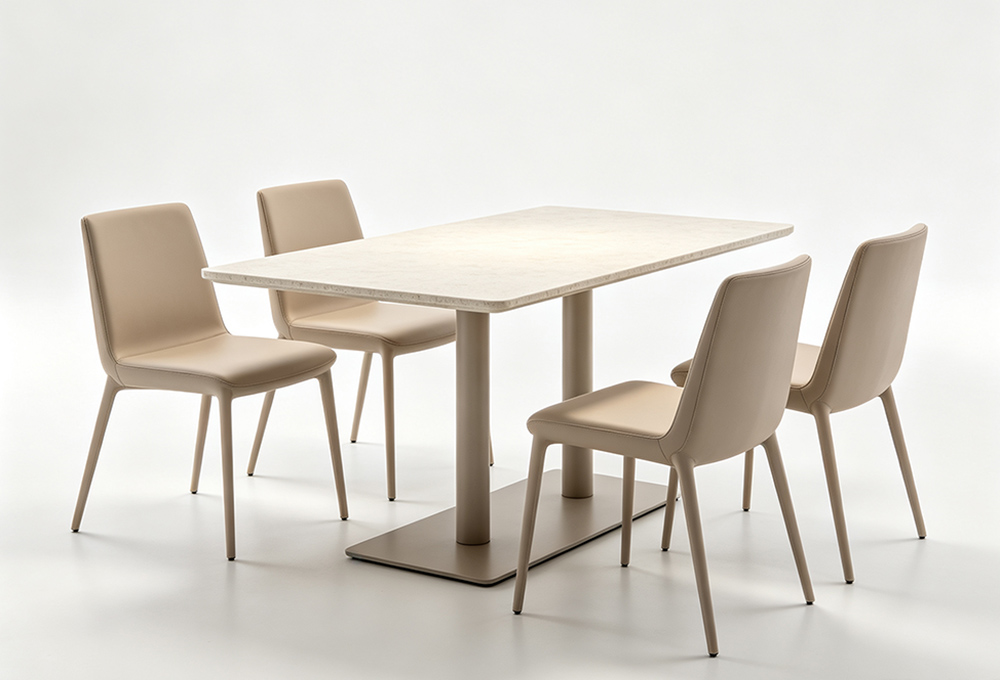
Stainless steel rarely appears on design mood boards, but ask any restaurant that has operated for 20+ years – they will tell you it is the only table material they have almost never had to replace.
Advantages of stainless steel:
• Completely waterproof – ideal for patios, beer gardens, and waterfront settings.
• Excellent hygiene – easily meets health‑code standards.
• Typical lifespan of 20–30 years – exactly why commercial kitchens are full of it.
• Price range $100–180 per top, cheaper than quartz.
The drawbacks are obvious: it reads "industrial," shows fingerprints easily, and can feel cold in fine‑dining settings. But for outdoor seating or modern fast‑casual spaces, a stainless steel dining table will outlast your lease – literally.
The Real Cost Comparison at a Glance
Rather than arguing over who "wins," here is the math that matters – the annual cost of ownership in a high‑traffic restaurant:
|
Material |
Typical Cost (per top) |
Expected Lifespan |
Annual Cost |
|
Low‑grade veneer |
$40–70 |
2–3 years |
~$22 |
|
HPL laminate |
$60–120 |
5–8 years |
~$13 |
|
Commercial‑grade white oak |
$150–300 |
12–15 years |
~$16 |
|
Quartz |
$200–400 |
15+ years |
~$20 |
|
Stainless steel |
$100–180 |
20–30 years |
~$6 |
Notice something? The cheapest product to buy has the highest long‑term ownership cost. That $50 cheap table top is essentially a consumer trap.
Three Mistakes That Shorten Table Lifespan (No Matter What You Buy)
After seeing thousands of commercial tables in the field, the same three failure modes appear again and again:
• Poor edge banding – thin 1mm edge banding peels within a year. For laminate and plywood tops, insist on 2mm PVC edge banding or solid wood edges.
• No moisture barrier – water seeps into screw holes and swells the core. Confirm whether the underside is sealed – most cheap products skip this.
• Undersized bases – a heavy top on a flimsy base wobbles, loosens, and cracks. Tops and bases must be weight‑rated for each other.
Any reputable wholesale dining table manufacturer will walk you through these three details; their answers directly reflect product quality.
So, How Do You Actually Choose?
Here are objective, scenario‑based recommendations – not a vague "it depends":
• High‑turnover casual / fast‑casual – choose HPL laminate. Best overall value, survives daily heavy wear, and individual tops can be replaced later.
• Upscale dining / hotels – choose commercial‑grade white oak or quartz: wood for warmth, quartz for zero maintenance.
• Outdoor patio / craft brewery – go straight for stainless steel. Nothing else survives both weather and service abuse.
• Multi‑unit chains – use quartz for brand visual consistency; for 50+ locations needing cost control, use contract‑grade plywood substrates with HPL.
• Budget boutique cafés – use 18mm plywood with quality veneer – strong, stable, and half the price of solid wood.
One last piece of advice: before committing to a bulk order, get a sample or buy one test table first. Reputable manufacturers accept this; suppliers who refuse samples are a red flag.
Buy Right Once, Save Headaches for Years
There is no universally "best" durable material – you need to choose based on your foot traffic, concept positioning, and maintenance reality. Laminate and stainless steel have the lowest annual ownership cost. Quartz combines premium aesthetics with zero upkeep. Solid wood delivers outstanding looks, but only if you specify commercial‑grade and maintain it properly. Whatever you choose, remember: a restaurant dining table is commercial equipment, not décor. Spec it like equipment, and it will serve you reliably for a decade or more.
FAQ
1. What is the single most durable material for restaurant dining tables overall?
In pure lifespan terms, stainless steel comes out on top (20–30+ years). For a balance of aesthetics and durability, quartz is better. For indoor dining settings, quartz is the most practical choice – completely stain‑proof and maintenance‑free.
2. What is a realistic lifespan for a commercial dining table?
A properly specified commercial‑grade table should last 10–15 years indoors. If yours fail in 2–3 years, it is usually due to cheap edge banding, unsealed undersides, or low‑pressure cheap laminate – not a flaw in the material category itself.
3. Is solid wood worth the extra cost over laminate?
Yes – but only commercial‑grade solid wood: hardwood species, ≥38mm thickness, catalyzed finish. Cheap "solid wood tables" sold through retail channels are actually less durable than quality laminate. For high‑turnover casual concepts, quality laminate usually makes more financial sense.
4. What should I verify before placing a bulk order?
Three things: edge banding thickness (2mm minimum), sealed undersides, and matched base‑to‑top weight ratings. Then buy one sample table, simulate a week of wear and tear, and only then place the bulk order.
5. Where should I buy commercial dining tables in bulk?
Work directly with a wholesale dining table manufacturer, bypassing retailers and middlemen. You will get commercial‑standard products with customization options (sizes, finishes, logo embossing); bulk pricing can be 30–50% lower, and you can request samples and written warranty terms.