
How Far Should Coffee Table Be From Couch? The Spacing Secret Designers Don't Tell You
Picture this: it’s Friday night, and you curl up on the sofa with a glass of red wine, ready to binge watch your favourite show. You lean forward to grab the remote resting on the coffee table, but you only end up in an awkward half yoga pose, straining your back just to brush the table corner. Worse still, you stand up for snacks and bash your shin hard against the table edge, seeing stars from the sharp pain. Sound familiar? Here is a seldom mentioned truth: the gap between your sofa and coffee table directly shapes your real world living room experience, and it is not just about how good it looks in magazine renders. Let’s break this subject down thoroughly so you can avoid those painful missteps and create a space that truly works for you.
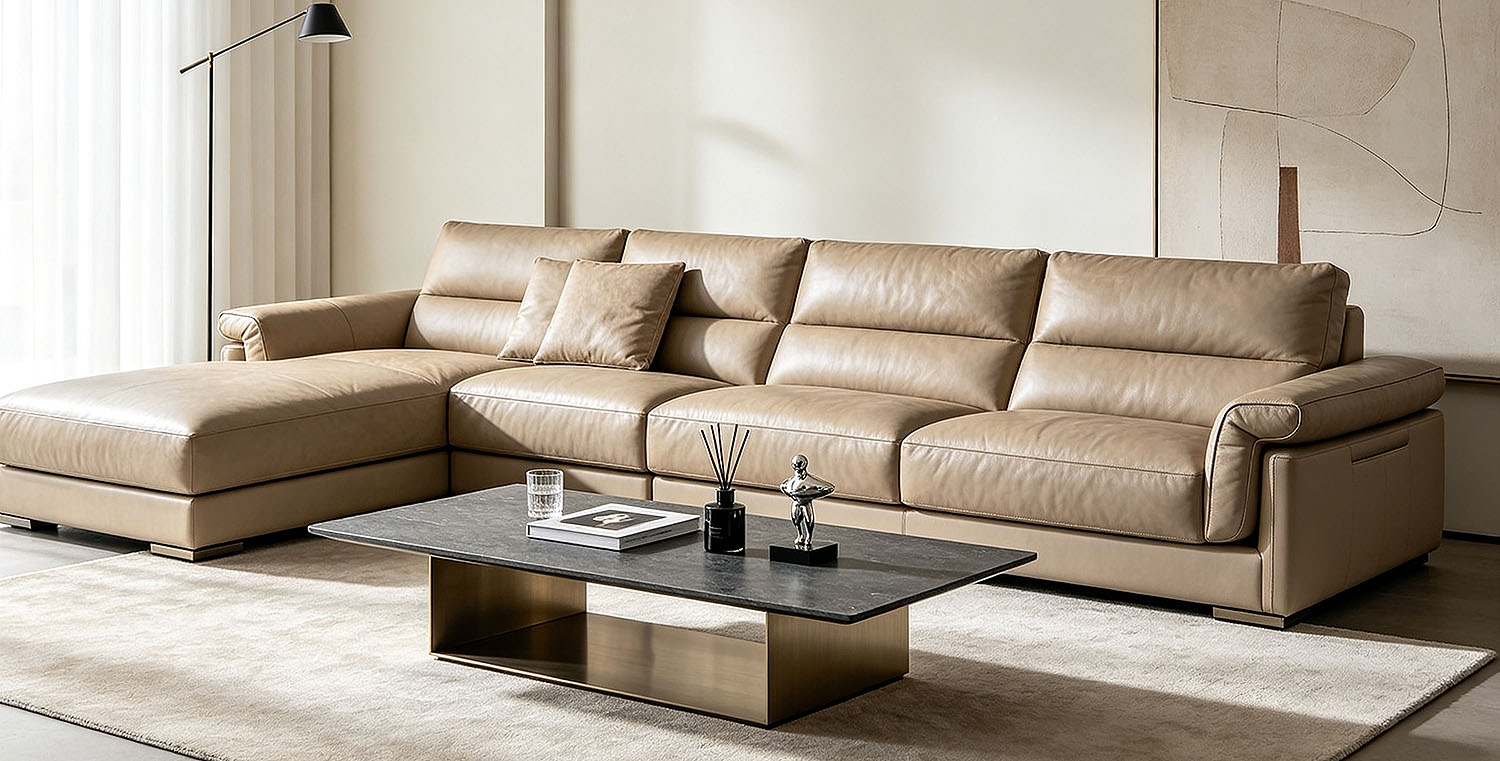
The 16 to 18 Inch Golden Comfort Gap
Let’s be honest: most people never measure this gap at all. They simply shove the coffee table up against the sofa and call it done, and later they wonder why the room feels cramped and why guests look ill at ease. They also wonder why kids treat that narrow gap as an obstacle course track. When the table sits too close, every movement becomes cumbersome: you must sidestep to pass through, and extending your legs means you will kick solid wood. Hosting guests turns the area into an indoor traffic jam, and it ruins the relaxed atmosphere you want. On the flip side, if you pull the table too far away—24 inches or more—the living room instantly loses its welcoming vibe. Conversations feel distant, and grabbing a drink becomes a hassle. The space stops feeling like a home and starts resembling a waiting lounge, so spacing is far more than cold numbers; it defines your room’s mood and how people feel when they gather there.
How to Match Your Couch to a Coffee Table
Pairing a sofa with a coffee table is like matching wine to food: get it right, and everything harmonises; get it wrong, and something just feels off. Below are practical methods that industry professionals follow to ensure you get the perfect match for your space.
1. Follow the Two Thirds Rule
Your coffee table length should equal roughly two thirds of your sofa’s total length, so for an 84 inch sofa, a 56 inch coffee table works perfectly. This balances visual weight so neither piece overwhelms the other nor looks undersized.
2. Height Makes All the Difference
Ideally, your coffee table top sits level with your sofa cushions, or 1 to 2 inches lower. If it is too high, the coffee table looks like a dining table intruder in your living room; if it is too low, you must bend deeply every time you reach for items.
3. Shape Has Greater Impact Than You Expect
Round coffee tables soften a space and work exceptionally well with sectionals because they have no sharp corners, while rectangular tables are the classic companion for standard sofas. Square tables shine for layouts featuring two sofas facing one another.
4. Let Your Daily Lifestyle Guide Your Choice
Do you eat or work from your couch? Do toddlers run and play around the furniture? Compared to pretty online inspiration photos, your real life habits are the top priority when selecting your coffee table material, size and finish.
5. Do an On Site Walk Through Test
Before final placement, use painter’s tape to mark your coffee table outline on the floor, walk around it, sit down, and simulate grabbing a drinking glass. If the taped outline already feels awkward, a solid wood table will feel just as uncomfortable. Think of your sofa and coffee table as dance partners: they move in harmony without stepping on each other’s toes.
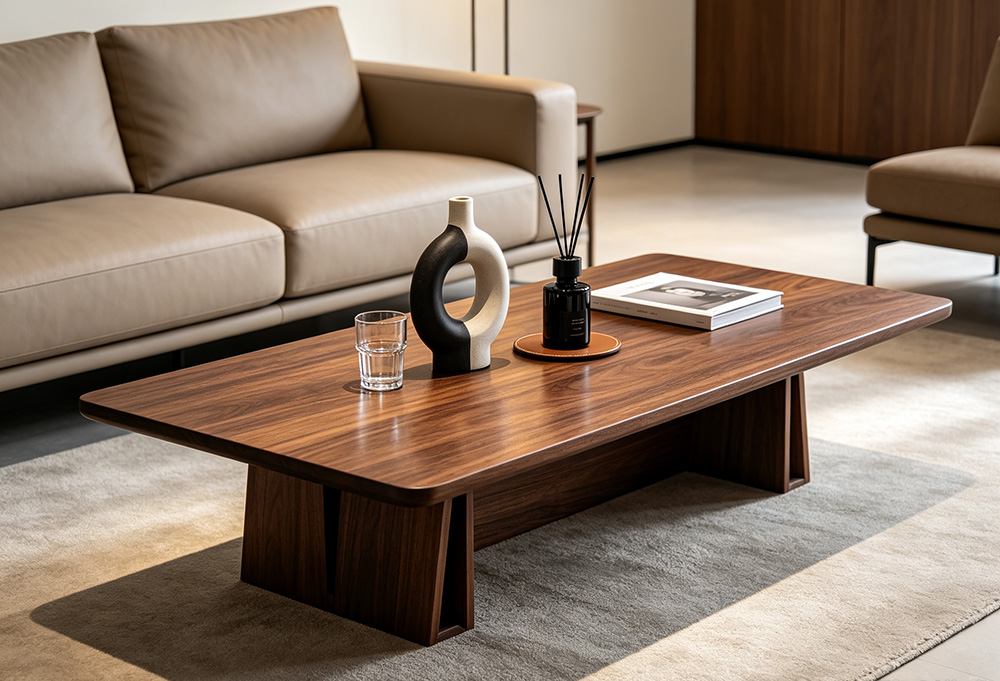
Height: The Overlooked Comfort Killer
People fixate on spacing yet completely overlook height, and that is a major mistake. An overly tall coffee table forces you to hold your arms raised as if you are sitting at an office desk, while one that is too short makes you hunch over as if you are searching for something beneath a bed. Both scenarios are uncomfortable and destroy your relaxed lounge atmosphere.
1. Standard Golden Height
For most sofas, you should choose a coffee table height of 16 to 18 inches because this aligns with typical cushion heights, making forward reaching motions completely natural and effortless.
2. Low Profile Sofas
If you own a modern low slung sofa, you should opt for a correspondingly low coffee table, maxing out at 12 to 14 inches; a tall table paired with a low sofa creates jarring visuals, much like placing a giraffe next to a poodle.
3. Traditional High Seat Sofas
Formal vintage style sofas often sit 20 inches or higher off the ground, so you should match them with an 18 to 20 inch tall coffee table to avoid reaching down into what feels like a pit.
4. Multi Functional Coffee Tables
If you plan to dine, work or do crafts atop your coffee table, you should pick one measuring 20 to 21 inches high, or even better, select an adjustable height model that adapts to different activities.
5. The Book Stack Test
Unsure about height? Stack books or cardboard boxes to your target height and live with that setup for a weekend; notice how your body feels while reaching, relaxing and moving around, and your body will give you the honest answer.
Hidden Shape Insights: Designer Know How
A coffee table’s shape influences more than aesthetics because it reshapes your entire room’s circulation. Round tables facilitate easy movement, rectangular tables bring structure, and oval tables deliver the best of both worlds. You should choose carefully, because shape impacts layout spacing just as much as physical dimensions.
1. Round Coffee Tables: Small Space Heroes
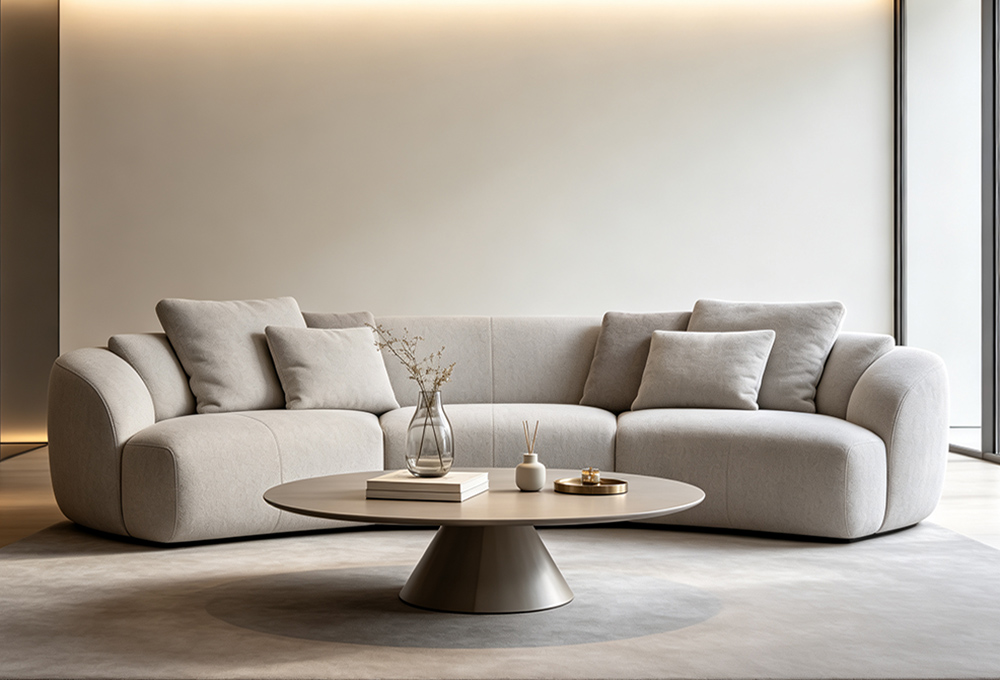
Round coffee tables are perfect for compact homes and households with young children because sharp corners are eliminated to prevent shin injuries, and curved edges naturally guide foot traffic and reduce collisions.
2. Rectangular Coffee Tables: Timeless Balanced Pick
Rectangular coffee tables complement standard sofas with matching geometry; however, you should keep table length under three quarters of your sofa length, or the table will appear domineering and crowd the room.
3. Square Coffee Tables: Go To for Symmetry Lovers
Square coffee tables suit sectionals or opposing pairs of sofas well, creating a strong central focal point that gives every seating spot easy access to the tabletop.
4. Nesting Coffee Tables: Flexible Space Saving Solution
Nesting coffee tables offer a flexible answer for limited square footage: you can pull out smaller tabletops for extra surface when needed and tuck them away afterwards, so one footprint effectively delivers multiple tables.
5. Upholstered Ottomans: Casual Alternative Option
You can place a tray on top of an upholstered ottoman, and it doubles as a coffee table plus extra guest seating; its low, soft build fosters a laid back, lounging oriented atmosphere.
Smart Sourcing: Buying Channels for Industry Professionals
You have locked in dimensions and settled on a shape, so now it is time to shop. A real world note: buying retail at full price is not your only option, and it is certainly not the wisest one when furnishing multiple spaces.
1. Large Scale E Commerce Platforms: Convenient yet Inconsistent Quality
Platforms like Wayfair and Amazon offer endless selections, but quality is hit or miss; product photos can be misleading, materials vary widely, and furniture return shipping costs are notoriously troublesome.
2. Local Physical Showrooms: Test In Person Before Purchasing
Brick and mortar showrooms let you touch, lift and inspect furniture firsthand so you can examine finishes, assess weight and spot issues like wobbly legs ahead of purchase, though downsides include higher price points and limited stock.
3. Custom Furniture Makers: Your Dream Piece Matched to Your Budget
When standard sizes fail your floor plan, custom workshops build furniture to your exact requirements; they come at a premium, yet they are well worth the investment for unusual layouts or distinct design visions.
4. Vintage & Second Hand Furniture: Unique Character at Lower Cost
Thrift stores and estate sales feel like treasure hunts where you may find solid wood pieces far below retail prices, but always bring a measuring tape and be prepared for refinishing work.
5. Wholesale coffee table Suppliers: The Industry Insider’s Choice
For commercial projects, multiple show home fit outs or bulk rental property furnishing, wholesale coffee table suppliers are an outstanding solution because you benefit from better pricing, bulk order support, and frequently customisable finishes and sizes. Industry insiders rely on these suppliers to control costs without sacrificing style.
Quality Must Never Be an Afterthought
A coffee table is more than decor; it is hard working everyday furniture that holds mugs, stacks of books, your feet, laptops, and sometimes energetic children. Cheap options may seem appealing upfront, yet within six months you risk wobbly frames and scratch covered surfaces, which wastes money and creates a daily eyesore.
1. Materials Tell the True Story
Solid wood, metal frames and tempered glass signal robust construction, while particleboard and thin veneer may look acceptable in store but they chip, warp and degrade over time. Lift the piece to check its weight, because high quality coffee tables feel substantial, not hollow and lightweight.
2. Joinery Is the Core Standard
Dovetail joints, reinforced corners and metal support brackets indicate long lasting build quality, and if legs wobble on the showroom floor, imagine their condition after six months of household use.
3. Finishes Protect Your Investment
Premium finishes resist stains, scratches and water rings left by drinking glasses, so always ask about cleaning and care instructions. Walk away if sales staff cannot answer basic product questions, because reputable manufacturers know their merchandise thoroughly.
4. Warranties Represent Manufacturer Confidence
A one year warranty is standard coverage, but five year or longer warranties demonstrate strong faith in craftsmanship, so paying slightly extra for peace of mind is worthwhile.
5. Work Directly With Coffee Table Manufacturers
For reliability, customisation and consistent quality, you should partner directly with coffee table manufacturers, as factories oversee the full workflow from raw material sourcing to final pre shipment inspection, which results in fewer defects and improved customer support. Whether you need one custom made unit or full container bulk shipments, they can produce goods to your specifications.
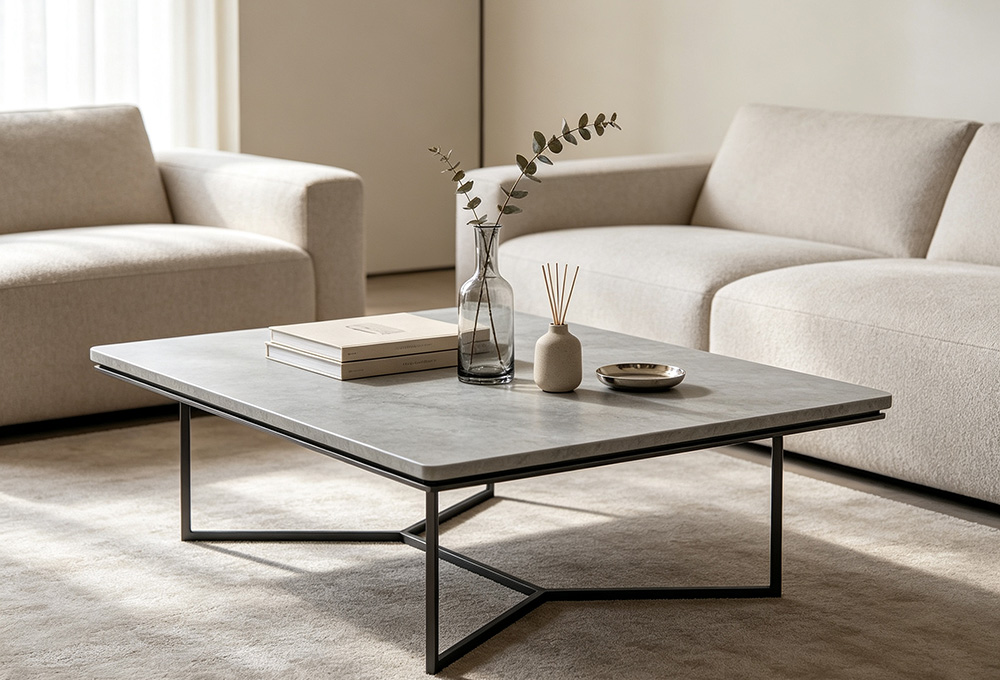
At the end of the day, the empty space between your sofa and coffee table is not just bare floor; it determines whether your living room feels cluttered and cramped or open and relaxing. You should stick to the baseline 16 to 18 inch rule, match coffee table height to your sofa cushions, pick shapes suited to your lifestyle, and never sacrifice quality for rock bottom pricing. A well positioned, well built coffee table fills more than empty space because it becomes your living room’s visual anchor. It makes Friday nights cosier, Sunday mornings more restful, and every conversation more comfortable. Measure twice, buy wisely, and enjoy your home space.
FAQ
1. Can I place my coffee table less than 16 inches away from the sofa?
You technically can, but it is not recommended. Below 14 inches, your living room easily turns into a shin banging obstacle zone. When space is tight, select a narrower coffee table model instead of shoving the table closer to the sofa.
2. What is the maximum recommended distance between coffee table and couch?
Do not exceed 24 inches. Past this threshold, the coffee table becomes disconnected from seating, reaching items becomes cumbersome, and the room loses its warm, social atmosphere.
3. Must the coffee table sit perfectly centred with the sofa?
Yes. Centre it relative to your main seating piece, whether a standard sofa or a sectional. If multiple seating pieces exist, centre it against the middle of the full seating arrangement.
4. Does rug size affect coffee table placement?
Absolutely. The coffee table should sit fully atop the rug, with front legs of sofas and chairs also resting on the rug surface. This anchors the whole seating zone and stabilises the layout visually.
5. How should you arrange a coffee table with a sectional sofa?
Position the coffee table 16 to 18 inches from the primary seating edge. If your sectional includes a chaise lounge, preserve walking clearance around the corner. Round or oval coffee tables generally work best with sectionals to soften sharp angles.